The Future of Aptarmers

Dr. Jonathan Moustakist
Co-Founder and CTO of LumeHealth

2 min read

Right now, antibodies are the industry standard for highly-sensitive tests. They are used from COVID tests to drug tests to forensic analyses. While antibodies are extremely sensitive, they are very difficult to transport. This makes it challenging for at-home testing where the sensor needs to be durable enough to survive transit. Unfortunately this is where the user-need is. The value of the test is its accessibility, but if it cannot withstand long and challenging transportation, then it brings no value to the user.
Furthermore, antibodies can be unreliable because they are naturally produced. A lot of research uses antibodies and depends on slim margins for data. Antibody variation is a significant systematic error that lacks resolution in science. Due to antibody variation, an entire study could show little correlation between factors - even if that isn't the case. While methods like monoclonal and recombinant antibody production have improved consistency, batch-to-batch variation remains a persistent challenge that's difficult to fully eliminate.
In addition, antibodies are difficult to reproduce exactly. This has implications because the antibody production process often involves injecting animals with diseases and then extracting their blood. It would be better to source antibodies in a way that didn't rely on animals. This method also makes antibody production time-consuming and expensive, and the biological variability that it introduces is hard to engineer away.
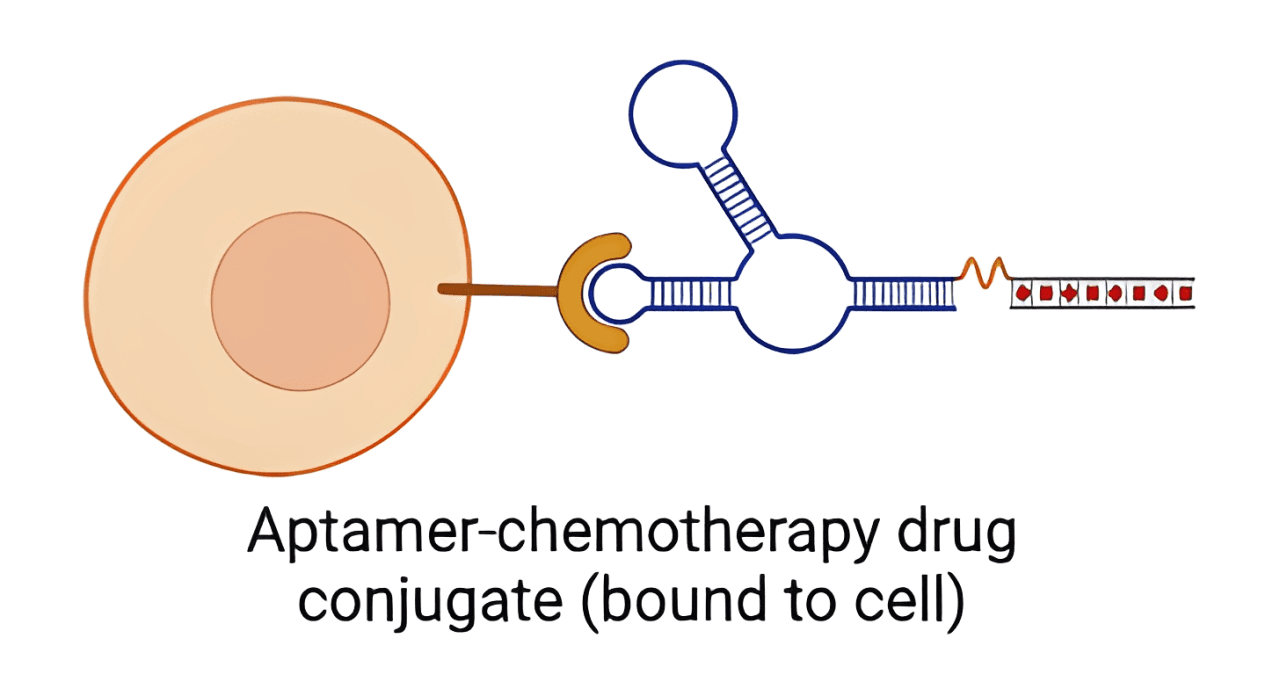
The solution is aptamers. In the past couple of years, synthetically manufactured strands of DNA have been created to detect tiny molecules, providing an alternative to antibodies. Similar to a lock and a key, the aptamer is the lock, and the molecule is the key. When the molecule encounters the aptamer, the aptamer is “opened” and it changes shape. The change in shape can trigger something, such as releasing a drug.

Aptamers have potential for drug delivery, in part for their high degree of specificity and their small size. So for diseases where medicine needs to omit certain cells and cannot wipe out all cells, such as pancreatic cancer and Alzheimer’s disease, aptamers pose an elegant solution. Furthermore, due to their small size, aptamers can access parts of the body that have been previously unreachable. For example, aptamers can travel through the cell membrane whereas antibodies are too large. This enables drugs to deal with intracellular enzymes, structural proteins, or mutated DNA - areas crucial for cancers and protein diseases like Sickle Cell Anemia.
Another application can be useful in home-health monitoring. Because aptamers are easily transportable and highly sensitive, they can make at-home testing more accessible. Whether that’s improving colorectal cancer tests or advancing continuous health monitoring, aptamers could help improve rural access to healthcare.
Lume Health is capitalizing upon the accessibility of aptamers for the development of a wearable endocrine monitor. Without having to rely on antibodies and labs, the monitor can continuously measure cortisol levels in a tiny sensor on the wrist.

That said, aptamers aren't hugely in the market yet. This is due to two reasons. The first is that aptamers can be quickly broken down by enzymes in the body, which limits how long they last once administered. This makes it challenging for drugs to stay in the body, which is a significant barrier. The second is that manufacturing at scale is still relatively new and costly. Compared to decades-old antibody production and the millions of dollars invested in antibodies, pivoting to aptamers will take a monumental shift. These are part of why aptamers haven't quite yet displaced antibodies, despite promising research.
Further reading:
Dr. Jonathan Moustakist
Co-Founder and CTO of LumeHealth